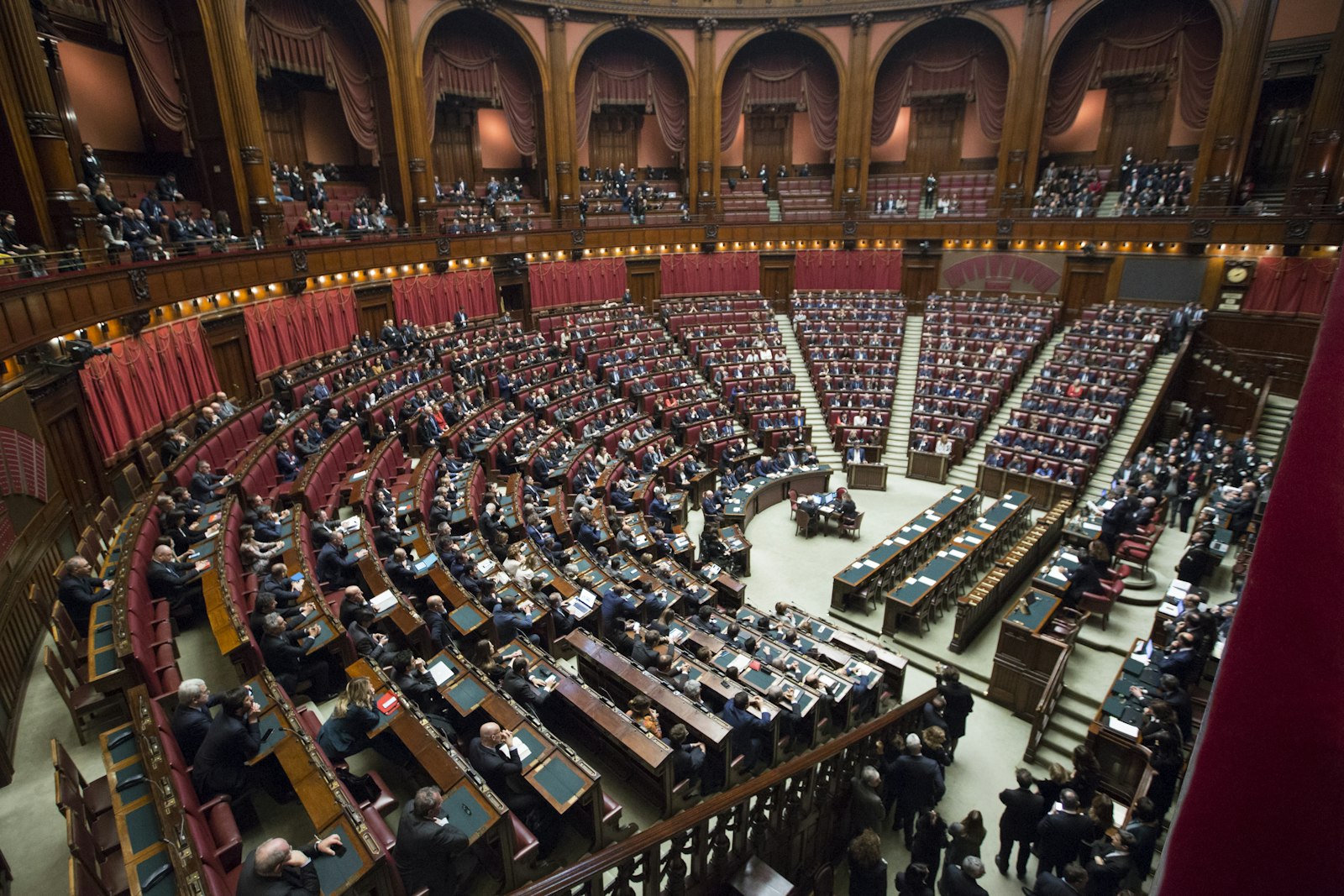
What Public Procurement Means
Public procurement is the process by which governments and public bodies acquire goods, services, and works using public funds. Because the money belongs to taxpayers, the process is governed by law rather than by company policy: contracts must usually be advertised, evaluated against published criteria, and awarded through a documented, contestable procedure. That legal framing is the single biggest difference between buying for a ministry and buying for a private firm.
Every level of government does it. National departments procure defence systems and IT platforms; local authorities procure school meals, road maintenance, and social care; hospitals, universities, and utilities run their own regulated buying. Collectively, public procurement accounts for a large share of national spending in most economies — typically estimated in the range of 10–15% of GDP across developed markets, though the exact figure varies by country and how the boundary of "the public sector" is drawn.
The discipline borrows the same building blocks as commercial buying — sourcing, evaluation, contracting, supplier management — but wraps them in obligations of transparency and equal treatment. If you understand how the source-to-pay process works in general, public procurement is that same arc with a statutory rulebook bolted on at every stage.
Key Takeaways
- It spends public money under law. Advertising, evaluation, and award are governed by regulation, not discretion.
- Five principles drive everything: transparency, equal treatment, competition, proportionality, and value for money.
- The method follows the money. Higher-value, more complex contracts trigger formal open or restricted tenders; low-value buys allow lighter routes.
- Auditability is the deliverable. A defensible paper trail matters as much as the price you secured.
- AI is arriving carefully. Spend analytics, supplier risk, and bid management tools are entering public buying where transparency rules allow.
Public vs Private Procurement
The clearest way to grasp public procurement is to set it against the private-sector buying most practitioners know. A corporate buyer can pick a preferred supplier on Monday and sign by Friday. A public buyer generally cannot — not because they lack judgement, but because the law requires them to demonstrate that any qualified supplier had a fair shot at the work.
| Dimension | Public Procurement | Private Procurement |
|---|---|---|
| Governing rules | Statute and regulation | Company policy |
| Advertising | Mandatory above thresholds | Optional / discretionary |
| Primary goal | Value for money + fairness | Value + speed + relationship |
| Supplier challenge rights | Formal right to challenge | Rare / contractual only |
| Audit & transparency | High, often public record | Internal only |
| Decision speed | Slower, process-bound | Faster, discretion-driven |
This is the same tension that runs through the wider direct vs indirect procurement distinction: the more accountability a purchase carries, the more structure it attracts. In the public sector, almost everything carries accountability, so structure is the default rather than the exception.
The Core Principles
Public procurement regimes around the world — from the EU directives to the US federal acquisition framework to the UK's post-Brexit rules — differ in detail but converge on a small set of principles. Get these right and most specific rules follow logically.
Transparency
Opportunities are advertised, criteria are published in advance, and decisions are recorded. The test is whether an outside observer could reconstruct why the winning bid won. This is why public buyers obsess over documentation that private buyers treat as optional.
Equal treatment and non-discrimination
Every bidder gets the same information at the same time, evaluated against the same criteria. A clarification given to one supplier must be shared with all. Local-supplier favouritism, unless explicitly permitted by policy, breaches this principle.
Competition
The process must genuinely open the contract to the market. Specifications written to fit one vendor, or thresholds gamed to avoid advertising, undermine competition and are common grounds for challenge.
Proportionality
The process must fit the contract. Requiring a £5m turnover certificate for a £20k contract is disproportionate and excludes capable small suppliers. Proportionality is what keeps low-value buying from drowning in formality.
Value for money
Value for money is not the same as lowest price. It is the optimal combination of cost and quality over the life of the contract — which is why total cost of ownership analysis and whole-life costing have become central to modern public evaluation.
Procurement Methods and Procedures
Once a need is defined, the buyer selects a procedure. The choice is driven mainly by contract value and complexity, and most regimes offer a recognisable menu.
| Method | How it works | Best suited to |
|---|---|---|
| Open tender | Any supplier may submit a bid | Standard goods/services, broad market |
| Restricted / selective | Shortlist qualified suppliers, then invite bids | Specialist needs, many potential bidders |
| Competitive dialogue | Iterative discussion to refine a complex solution | Major IT, infrastructure, PPPs |
| Negotiated procedure | Negotiate terms with one or more suppliers | Complex or hard-to-specify needs |
| Framework agreement | Pre-agreed terms; call off as needed | Repeat or rolling requirements |
| Dynamic purchasing system | Open electronic list suppliers can join anytime | Commoditised, frequently bought items |
| Direct award | Award without competition | Low value or genuine single-source |
Frameworks and dynamic purchasing systems deserve special mention because they are where public buying most resembles modern category management. They let an authority run one rigorous competition, then buy repeatedly against it for years — a structure that pairs naturally with the kind of strategic sourcing approach used in the private sector.
Choosing the wrong procedure is one of the most consequential early mistakes. An open tender for a genuinely complex, hard-to-specify requirement wastes both the buyer's and the market's effort, while a negotiated procedure used where a simple open tender would suffice invites challenge on the grounds that competition was unnecessarily restricted. The procedure decision should follow directly from two questions answered honestly at the strategy stage: how well can the requirement be specified in advance, and how many capable suppliers realistically exist? When the answer to either is "few" or "not clearly," a more dialogue-based route is usually defensible; when both are strong, the simplest competitive method is almost always the right call.
Thresholds: What Triggers a Formal Tender
Thresholds are the monetary trip-wires that decide how much process a contract attracts. Below a threshold, a buyer may use a light-touch quote process; above it, formal advertising and a regulated procedure usually become mandatory. Separate thresholds typically apply to goods, services, and works (construction), with works thresholds set much higher because projects are larger.
The important practical point is that thresholds change. Most regimes revise them on a fixed cycle, and the figures differ between jurisdictions and even between central government and other public bodies. Rather than memorise a number, treat the current published threshold as a parameter to confirm at the start of every procurement. Splitting a contract into smaller lots specifically to dodge a threshold — "disaggregation" — is one of the most common compliance failures and is explicitly prohibited in most rulebooks.
"In public procurement, the threshold question is asked before the sourcing question. You decide which rulebook applies, then you decide how to buy."
The Public Procurement Process, Step by Step
Although procedures vary, a regulated public procurement follows a recognisable lifecycle. Each stage produces a record that feeds the audit trail.
- Need identification and business case. Define the requirement, confirm budget, and justify the spend. Strong needs analysis prevents the over-specification that kills competition.
- Market engagement. Pre-tender market consultation or a request for information (RFI) tests feasibility and shapes the specification without prejudicing fairness.
- Procurement strategy and procedure choice. Confirm the threshold position, choose the method, and set evaluation criteria and weightings in advance.
- Advertising and documentation. Publish the notice and issue tender documents, including the specification or statement of work, terms, and scoring model.
- Bid submission and clarification. Suppliers respond; clarifications are answered openly and shared with all bidders.
- Evaluation. Score bids against published criteria — typically a blend of quality and price — with moderation and documented rationale.
- Award and standstill. Notify the winner and unsuccessful bidders. Many regimes require a standstill period during which decisions can be challenged before the contract is signed.
- Contract management. Manage delivery, performance, and variations through the life of the contract, then capture lessons for the next cycle.
Notice how much of this is documentation discipline rather than commercial cleverness. The evaluation and contract-management stages especially reward authorities that have already built a clean spend taxonomy and consistent supplier records, because consistency is what auditors and challengers test.
Common Challenges in Public Buying
Public procurement carries a recognisable set of pressures that practitioners spend their careers managing.
Speed versus compliance
Process protects fairness but adds time. Emergency and crisis buying expose this tension sharply, and the cases that later draw scrutiny are almost always the ones where speed overrode documentation.
Specification capture
Specifications written — deliberately or accidentally — around a single incumbent's product narrow competition. Good market engagement and outcome-based specifications are the antidote.
SME access
Disproportionate financial or insurance requirements lock out small and medium suppliers. Many governments now set explicit SME-participation targets, lowering barriers without lowering standards.
Social value and sustainability
Modern public buying increasingly scores bids on carbon, social value, and supply-chain ethics alongside price. That raises the bar on supplier data and links public procurement to the same Scope 3 emissions questions facing private buyers.
Fraud and probity
Where public money meets discretion, the risk of collusion, bid-rigging, and conflicts of interest rises. Strong procurement compliance controls and audit trails are the primary defence.
Buying for a public body?
Our government-sector guide maps the tools and controls that fit regulated buying, and the buyer's guide walks through evaluation end to end.
Where AI Fits in Public Procurement
Public buyers were cautious adopters of automation, for good reason: every decision must remain explainable and contestable. But the back-office and analytical parts of the process — where AI assists rather than decides — are now seeing real uptake. Based on our analysis of the vendor landscape, the public sector is adopting AI most readily in three areas.
Spend visibility and category analysis. Classifying years of fragmented spend across departments is a natural fit for machine learning, and it underpins better framework design. This is the same capability covered by our spend analytics AI tools category.
Supplier and risk intelligence. Screening suppliers for financial distress, sanctions, and integrity issues scales poorly by hand. Tools in the supplier risk management AI category automate continuous monitoring while leaving the award decision with humans.
Tender and bid management. Drafting specifications, structuring evaluation, and summarising long bid responses are increasingly AI-assisted, with the human evaluator retaining the scoring decision. For a full map of which vendors serve which need, our procurement AI vendor landscape and market map is the companion reference, and the government and public sector AI guide looks specifically at deployment in regulated buying.
The guardrail is consistent across every public application: AI may inform a decision, but the accountable officer must be able to explain and defend it. Transparency is not negotiable, so "black box" automation that cannot show its reasoning has limited room in public award decisions.
Best practices for adopting tools in regulated buying
The public bodies that adopt automation successfully treat it as a process change, not a software purchase. Three habits recur in the deployments our analysis rates highly. First, they keep a human in the loop at every point where the law assigns accountability — classification and risk screening can be automated, but scoring and award stay with named officers. Second, they demand explainability up front, writing it into the requirement so a vendor cannot hide evaluation logic behind a proprietary model. Third, they pilot on historical data before going live, which surfaces both the accuracy ceiling and the data-quality problems that usually limit it.
Data readiness is the quiet determinant. A tool that classifies spend or flags supplier risk is only as good as the records feeding it, so authorities with fragmented, inconsistent purchasing data see weaker results regardless of which platform they buy. That is why the highest-return first move is frequently not procuring AI at all, but consolidating supplier and spend records into a single, governed source — the same foundation that makes framework design and category management work. Buyers weighing a purchase should evaluate these platforms against published criteria exactly as they would any other supplier, with value for money and auditability as the deciding tests rather than feature lists.
Frequently Asked Questions
What is public procurement?
Public procurement is the process by which governments and public bodies buy goods, services, and works using taxpayer money. It is governed by law and policy to ensure spending is transparent, competitive, and delivers value for money, with formal rules on advertising, bidding, evaluation, and award that private-sector buying does not face.
How does public procurement differ from private procurement?
Public procurement is bound by statutory rules, mandatory advertising, audit trails, and the right of suppliers to challenge decisions, because it spends public funds. Private procurement is governed by company policy and can prioritise speed and relationships. Public buyers must document fairness and value for money at every stage; private buyers generally do not.
What are the core principles of public procurement?
Most regimes share five principles: transparency, equal treatment and non-discrimination, fair competition, proportionality, and value for money. These require open advertising of contracts, consistent evaluation criteria published in advance, and a clear audit trail so any supplier can verify the process was fair.
What are the main public procurement methods?
Common methods include open tender (any supplier may bid), restricted or selective tender (pre-qualified suppliers bid), competitive dialogue or negotiated procedure for complex needs, framework agreements and dynamic purchasing systems for repeat buying, and direct award for low-value or single-source purchases. The method chosen usually depends on contract value and complexity.
What contract value triggers a formal public tender?
Thresholds vary by jurisdiction and contract type, but most regimes require a formal advertised tender above a published monetary threshold and allow lighter processes below it. Confirm the current threshold for goods, services, and works in your own regulations, as these figures are revised periodically.
Ready to map public-sector buying to the right tools? Compare options in our source-to-pay AI category, or model the savings case with the procurement ROI calculator.