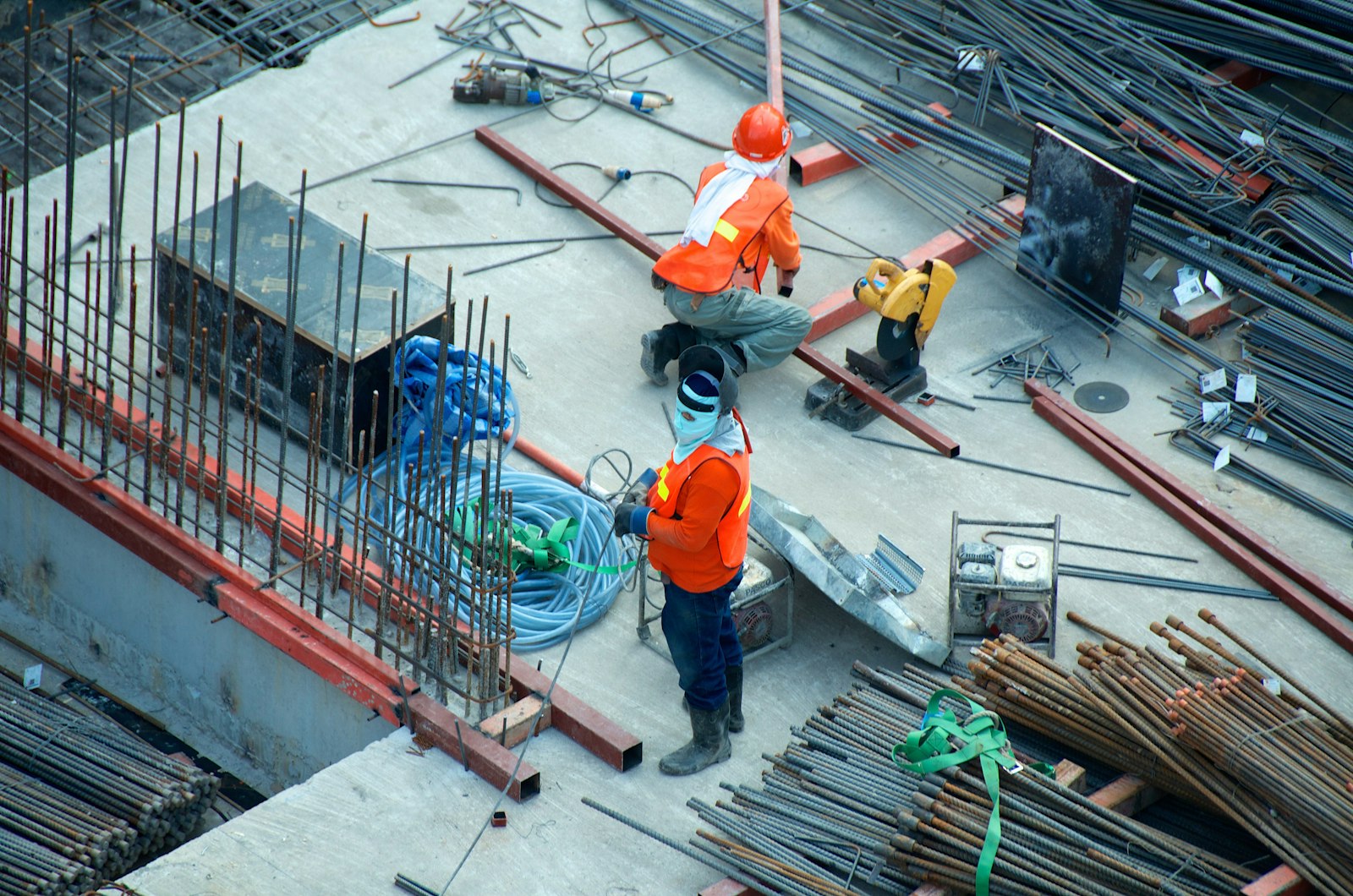
Construction project site representing procurement complexity in the construction industry
Industry Guide · Construction & Engineering · 2026

Procurement AI for
Construction

Construction procurement operates under relentless cost and schedule pressure that makes AI adoption both critical and challenging. Subcontractor management, materials cost volatility, project-level spend visibility, and contract compliance across thousands of active subcontracts — this guide covers where AI delivers measurable value in construction and which platforms are built for the industry's unique demands.

$13T
Global Construction Output — Procurement-Intensive
85%
of Construction Revenue Spent on Procurement
12-18%
Materials Cost Savings from AI Price Intelligence
60%
of Construction Firms Lack Real-Time Project Spend Visibility

Why Construction Is One of Procurement AI's Biggest Opportunities

Construction is one of the most procurement-intensive industries on earth — typically 80-90% of project revenue flows through procurement in the form of materials, subcontractors, equipment, and specialist services. Yet construction procurement has been one of the slowest sectors to adopt modern P2P technology, let alone AI. The result is an industry carrying enormous inefficiency: materials waste, subcontractor payment disputes, change order bloat, and project cost overruns that are attributed to "complexity" but are frequently rooted in procurement process failure.

The AI procurement opportunity in construction is concentrated in three areas. First, materials cost intelligence: construction companies buying steel, concrete, timber, copper, and mechanical, electrical, and plumbing (MEP) components at scale need commodity price monitoring and AI-powered timing recommendations that most procurement platforms weren't designed to provide. Second, subcontractor management: a major general contractor may manage 3,000-5,000 active subcontract relationships across dozens of simultaneous projects, with qualification, compliance, performance, and payment processes that are still largely manual. Third, project-level spend visibility: the inability to track actual-versus-budget procurement spend at the project level in real time is one of the primary reasons construction projects overrun — and AI spend analytics platforms are beginning to close this gap.

The ERP landscape in construction is more fragmented than most industries. Enterprise contractors use Oracle Construction and Engineering (formerly Primavera), SAP for enterprise financials, Viewpoint/Trimble for project accounting, Procore for project management, and a range of specialist construction ERP systems. Procurement AI platforms that claim construction capability must demonstrate genuine integration with construction-specific systems — not just financial ERP connectors.

Top Procurement AI Use Cases in Construction

Where AI delivers measurable value in construction procurement — from materials buying to subcontract management

Use Case 01

Materials Cost Intelligence and Buying Optimisation

AI platforms that monitor commodity price indices for steel, copper, timber, concrete, and MEP materials — and integrate this intelligence into procurement decisions — enable construction firms to time bulk material purchases for maximum cost advantage. Firms using AI price intelligence consistently outperform market average by 8-15% on major commodity categories over 12-month periods.

Sievo GEP SMART LevaData
Use Case 02

Subcontractor Qualification and Compliance AI

Qualifying subcontractors — financial health assessment, insurance verification, safety record review, licensing confirmation, and performance history — is a labour-intensive process that most construction companies still conduct manually. AI platforms that automate qualification workflows, continuously monitor subcontractor compliance status, and flag risk changes before they become contract issues reduce qualification time by 60-70% while improving risk coverage.

Coupa AI Jaggaer Ivalua
Use Case 03

Project-Level Spend Analytics and Cost Control

The inability to see actual-versus-budget procurement spend by project in real time is one of construction's most expensive information gaps. AI spend analytics platforms that integrate with construction project accounting systems — Viewpoint, Oracle CE, Procore — and provide real-time committed cost tracking against project budgets enable procurement teams to intervene before overruns become unrecoverable.

Sievo SpendHQ GEP SMART
Use Case 04

Subcontract and Supply Agreement AI Management

A major construction firm may have 10,000+ active contracts and subcontracts across ongoing projects. AI contract management that extracts key terms, tracks milestone obligations, monitors change order history, and flags compliance issues without manual review transforms a function that has traditionally been reactive — responding to disputes — into a proactive risk management capability.

Icertis Ironclad Agiloft
Use Case 05

AI-Powered Sourcing for Specialist Subcontractors

Finding and qualifying specialist subcontractors for niche construction trades — specialist civil works, complex MEP, structural steelwork, specialist facades — in new geographies is one of construction procurement's most time-intensive tasks. AI supplier discovery platforms that search beyond the approved supplier list for qualified specialist subcontractors significantly reduce the time-to-award for specialist trade packages.

Scoutbee TealBook Keelvar
Use Case 06

Automated Invoice Processing for Subcontractors

Construction AP is uniquely complex: invoices reference project codes, work package references, retention clauses, milestone certifications, and variation orders. AI invoice processing platforms that understand construction payment application structures — rather than treating construction invoices as generic AP — reduce invoice processing time by 75%+ and virtually eliminate payment disputes caused by mismatched reference data.

Basware Stampli Tipalti

Top Procurement AI Platforms for Construction

Independent reviews of the tools most commonly evaluated by contractors, developers, and engineering firms

Icertis contract management for construction subcontracts
Contract Management AI

Icertis

Enterprise CLM with significant construction sector presence. Icertis handles subcontract complexity — change order tracking, retention clause management, milestone-linked payment, performance bond monitoring — at the scale and structural complexity that generic contract tools cannot manage. Strong SAP and Oracle integration for enterprise contractors.

9.0/10 — Procurement Fit
9.2/10 — Contract Intelligence
GEP SMART procurement platform for construction materials sourcing
Source-to-Pay AI

GEP SMART

A strong choice for construction companies seeking unified source-to-pay capability with commodity spend intelligence. GEP's Quantum AI layer provides category spend benchmarking, negotiation intelligence, and market pricing data relevant to construction commodity categories. Handles the project procurement workflow with configurable cost-code mapping.

8.6/10 — Procurement Fit
8.4/10 — Sourcing Intelligence
Coupa AI subcontractor management for construction
Source-to-Pay AI

Coupa AI

Coupa's Business Spend Management platform is used by several major contractors for indirect and subcontractor spend management. Coupa's guided buying, approval workflows, and supplier management handle subcontractor onboarding and compliance monitoring. The platform is strongest for indirect categories and specialist subcontractor spend rather than bulk materials procurement.

8.4/10 — Procurement Fit
8.7/10 — Supplier Management
Sievo spend analytics for construction project cost control
Spend Analytics AI

Sievo

Spend analytics with strong industrial and project-based spend classification. Sievo's AI handles the mixed spend taxonomy of construction — combining commodity purchases, subcontractor services, equipment hire, and specialist trade packages — and maps to project cost codes for project-level reporting. SAP and Oracle integration is well-tested for construction environments.

8.5/10 — Procurement Fit
8.7/10 — Spend Classification
Keelvar AI sourcing optimisation for construction trade packages
Strategic Sourcing AI

Keelvar

Sourcing optimisation AI that performs particularly well for complex multi-attribute trade package awards — the kind of multi-lot, multi-criteria tender common in major construction projects. Keelvar's autonomous sourcing bots and optimisation algorithms handle the tradeoff complexity of subcontract award decisions at a level of mathematical rigour manual evaluation cannot match.

8.3/10 — Procurement Fit
9.0/10 — Sourcing Optimisation
Jaggaer construction procurement category management
Strategic Sourcing AI

Jaggaer

Jaggaer's category management capabilities and construction industry configurability make it a strong option for large contractors seeking strategic sourcing depth. The autonomous commerce features handle routine materials re-ordering, while the strategic sourcing suite manages complex trade package tenders. Strong ERP integration for Oracle and SAP construction environments.

8.4/10 — Procurement Fit
8.5/10 — Category Management

The Four Biggest Procurement Challenges in Construction

Understanding the procurement pressures that make construction different — and why generic P2P tools consistently underperform

01

Materials Price Volatility and Cost Certainty

Construction projects are bid at fixed prices that may take 18-36 months to complete. During that period, steel prices can move 30-40%, timber and lumber can double, and copper prices track global economic volatility. Procurement AI that helps construction firms hedge materials exposure, time bulk purchases, and build commodity price intelligence into bid pricing is increasingly essential for financial viability on large projects.

02

Subcontractor Management at Scale

A major general contractor manages hundreds of active subcontract relationships on any given day, spanning dozens of trade packages across multiple live projects. The qualification, compliance, performance, and payment management burden has historically required large dedicated teams. AI tools that automate qualification workflows, monitor compliance continuously, and flag performance and payment anomalies in real time are transforming the economics of subcontractor management.

03

Fragmented Project Procurement Data

Construction spend data is notoriously fragmented across project accounting systems (Viewpoint, Procore, Oracle CE), enterprise ERP, and dozens of site-level procurement processes that bypass central systems entirely. AI spend analytics platforms that can connect these disparate data sources and provide meaningful project-level spend visibility are solving a problem that has cost the industry billions in unidentified overruns and missed savings.

04

Contract Complexity and Change Order Management

Construction contracts are among the most complex commercial agreements in any industry: bespoke conditions of contract, complex payment mechanisms, extensive contractor design responsibility provisions, performance bonds, retention, liquidated damages, and dispute resolution procedures. The volume of change orders on major projects can exceed 1,000. AI contract management tools that track obligations, manage change orders, and identify risk in real time are converting manual legal overhead into automated compliance.

Compare Procurement AI Platforms for Construction

Evaluate the leading platforms side by side on construction-specific criteria: project spend integration, subcontractor management, materials intelligence, contract complexity, and Oracle/SAP/Viewpoint ERP integration depth.

Implementing Procurement AI in Construction: A 4-Step Framework

The practical sequence for construction firms deploying AI in a project-based, fragmented-data environment

01

Connect and Cleanse Project Spend Data

Construction procurement AI begins with data integration. Connecting project accounting systems (Viewpoint, Oracle CE, Procore) to a spend analytics layer — and establishing consistent cost code mapping across projects — is the foundation without which any AI analysis produces misleading results. This data integration phase typically takes 6-12 weeks for a major contractor and is the most underestimated part of the implementation.

02

Deploy Subcontractor Compliance Automation

With spend visibility established, automate the most labour-intensive procurement management process: subcontractor qualification and compliance monitoring. AI platforms that automatically verify insurance certificates, track licence renewals, monitor financial health indicators, and alert procurement teams to compliance gaps before they create contractual exposure deliver immediate efficiency gains and risk reduction.

03

Implement AI Contract Management for Active Subcontracts

Begin with a pilot of AI contract management on new subcontracts rather than attempting to migrate legacy agreements. AI extraction of key terms, milestone dates, change order history, and compliance obligations from new contracts builds the data foundation for portfolio-level risk monitoring. Once proven on new contracts, expand to the legacy portfolio through targeted extraction campaigns for high-value or high-risk agreements.

04

Build Materials Intelligence Capability

With procurement data, subcontractor management, and contract administration AI in place, layer commodity price intelligence for key materials categories. Configure alerts for price movements in strategic categories, integrate market intelligence into the bid preparation process, and build AI-assisted timing recommendations into major materials procurement decisions. This is where construction procurement AI transitions from operational efficiency to strategic competitive advantage.

Procurement AI Weekly

Construction procurement AI updates, tool reviews, and market intelligence every Tuesday. Trusted by 4,200+ procurement leaders across industries.